Resident AI Assistants Are Becoming the New Front Door for City Services
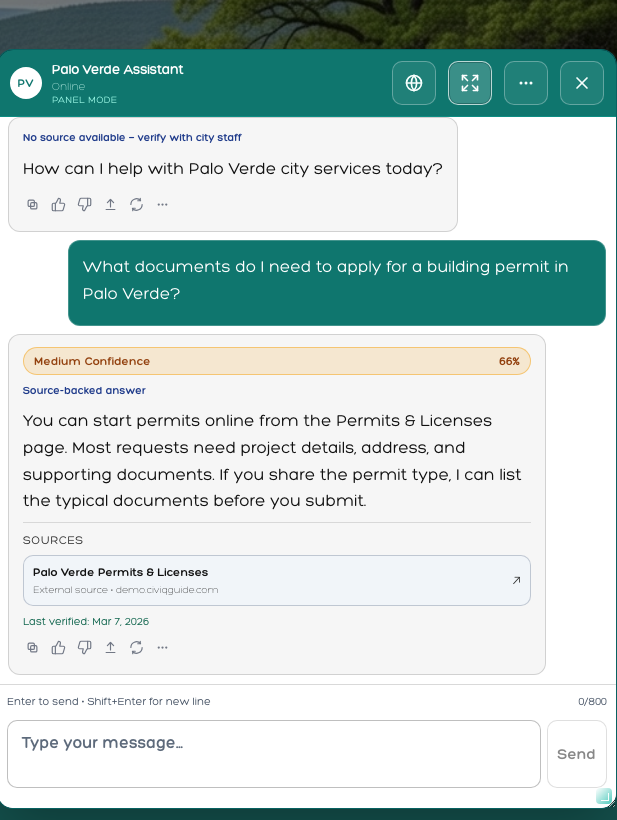
More cities are moving beyond FAQ bots to resident-facing assistants tied directly to approved content, service pages, and next-step routing.
CivIQ Guide Editorial
CivIQ Guide's editorial home for analysis, playbooks, field notes, and product updates across AI assistants, WCAG compliance, government websites, and digital service delivery.
Staff only. Sign in to access create, edit, and delete controls for shared posts.

More cities are moving beyond FAQ bots to resident-facing assistants tied directly to approved content, service pages, and next-step routing.
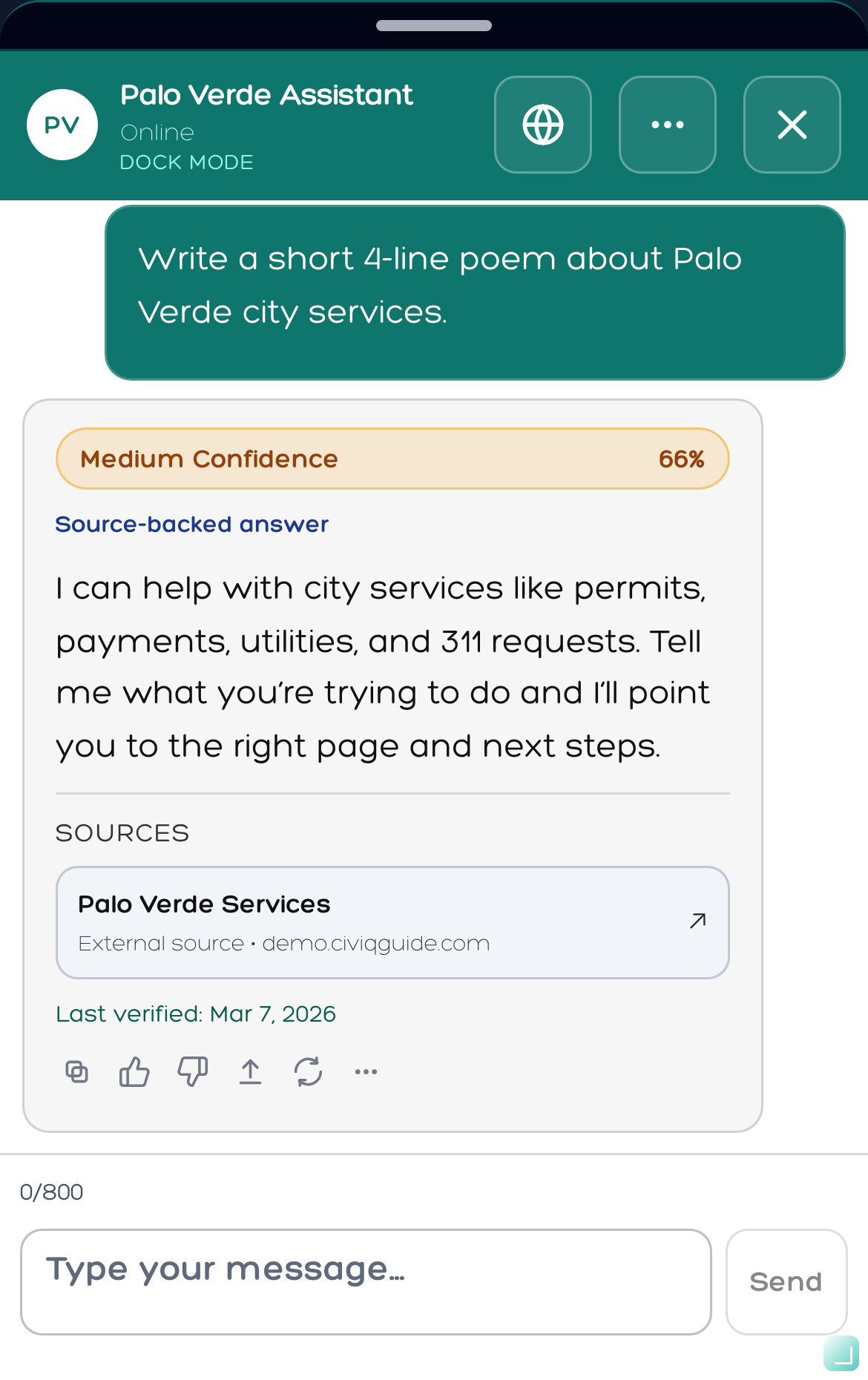
Source-grounded assistants are reducing call-center pressure while routing permits, utilities, and issue reporting into the right workflow.

Why it matters
Government teams no longer treat websites, AI assistance, and accessibility as separate tracks. The operating model is the product now.
Editorial stream
Filter by topic or browse the full editorial stream. Every story is written to help teams understand the operating model, rollout decisions, and product changes shaping digital government work.

Source-grounded assistants are reducing call-center pressure while routing permits, utilities, and issue reporting into the right workflow.

Navigation, page templates, and content operations are shifting toward resident task completion instead of static publishing models.

New workflows make it easier to move from resident question to governed answer to operational next step without losing context.

See how a connected website, assistant, and compliance workflow creates a cleaner experience from question to completion.

Ticket volume, accessibility issues, chatbot demand, and service bottlenecks tell one story when teams can view them together.

When forms, site content, and resident support answers drift apart, the result is more calls, more confusion, and more compliance exposure.

Texas municipalities face enforceable ADA Title II digital accessibility deadlines in 2026 and 2027. See what to prioritize now.

A structured remediation approach for teams handling ADA website compliance and WCAG gap closure under real deadlines.

Content workflows are a frequent source of accessibility regressions. Use this checklist to keep publishing compliant.
What we cover
Insights is where CivIQ Guide publishes its perspective on resident-facing AI, accessible service delivery, government web operations, and the releases shaping the product roadmap.
How source-grounded assistants deflect repetitive inquiries and route residents to the right task path.
Planning models for ADA Title II readiness, remediation waves, validation, and reporting.
Design, navigation, and content operations that align around resident outcomes instead of siloed pages.
How online forms, service requests, and public workflows fit into a cleaner digital operating model.
Governed content, approved documents, and retrieval patterns that keep answers accurate and explainable.
Signals across service demand, site health, and accessibility posture for faster operating decisions.
Popular now
Product updates
Compliance toolkit
Related solutions
Editorial perspective
Use Insights to keep CivIQ Guide's voice, analysis, and product changes in one stream. It is the editorial home for the ideas behind the products as well as the product updates themselves.
Editorial voice
Publish analysis, commentary, and field notes that explain how modern public-service operations are changing.
Product updates
Keep release notes, new launches, and rollout changes in the same place readers already visit for CivIQ perspective.
Bottom line
Improve accessibility, resident experience, and digital service delivery with one coordinated platform across AI assistance, government websites, and compliance operations.